• Skip to primary navigation
  • Skip to main content
  • Skip to primary sidebar
  • Skip to footer
Beautify Balham logo

Beautify Balham

Striving for a greener, cleaner and more beautiful Balham.

  • ABOUT
  • WHAT WE DO
    • COMMUNITY PLANTING
    • LITTER PICKS
    • CONNECTING THE COMMONS
    • SCHOOLS
    • BALHAM IN BLOOM
  • OUR FRIENDS
  • OUR SPONSORS
  • BLOG
  • DONATE
  • CONTACT US

Nature

The Bees Knees

December 1, 2022 by beautifybalham

When thinking about the word pollinator we tend to think of the fuzzy bumblebee, so it is amazing to realise that there are 1,500 species of insect pollinator in the UK including, not only the much loved bumblebee, but butterflies, moths, flies and beetles. Excitingly birds, bats and even monkeys are important pollinators in the rest of the world! But back to the streets of Balham…

We are lucky to live in a city that is almost 50% green space – nevertheless we can and should do more to support our threatened pollinators. Urban environments can even be seen as a refuge for biodiversity from intensively farmed agricultural landscapes.

If you want to make a difference, here are three easy steps to supporting local pollinators:

  1. Don’t use any pesticides;
  2. Grow plants with simple flower shapes;
  3. Aim for flowers all through the year.

Don’t use any pesticides

Insect populations have declined massively, and many put the blame on pollution through pesticide use. The best tactic is to not use them at all and garden organically.

Grow plants with simple flower shapes

Flower shapes evolved naturally to help encourage visits by pollinators. After all, the plants need pollinators to help them set seed. However, plant breeding by people has created more complex flower shapes, which are beautiful to the human eye but poorly adapted to pollinators. Avoid double and semi-double flowers to keep your pollinators happy.

Aim for flowers all through the year

The climate crisis is making our weather more unpredictable. We need to make sure that there is food available for pollinators at all times of the year in case unseasonable warmth brings hibernating insects out super early in the year, so we need to do a bit more planning for our planting schemes. Spring and summer are relatively easy seasons to keep the nectar flowing through lots of flowers, although there are some extra pollinator friendly plants I have listed below.

The plants listed here are great for nectar and pollen – but don’t forget that pollinators, just like humans, also need somewhere to live and raise their offspring.

Winter:

  • Hellebores
  • Snowdrops
  • Sweet box
  • Mahonia
  • Winter honeysuckle

Spring:

  • Catmint
  • Lungwort
  • Geranium species
  • Any of the flowering fruit trees like apple, plum and pear
  • Dandelion
  • Forget-me-not
  • Rosemary

Summer:
Oh my goodness – so many to choose from!
Just remember to keep flower shapes simple and avoid double and semi double. Some of the best are:

  • Lavender
  • Echium
  • Verbena bonariensis
  • Thyme
  • Oregano
  • Night scented stock (especially good for moths)

Autumn:

  • Asters
  • Japanese anemone
  • Simple (not double) dahlias
  • Common Ivy (also a great habitat provider)
  • Autumn flowering salvias
  • Ice plant (Sedum)

Following the three steps should bring a wealth of pollinators to your patch of space, no matter how small, and you will have made a difference. Happy pollinator spotting!

Hazel Norman – Chief Executive of the British Ecological Society – written in a personal capacity

If you want to write to us and have your own blog post & thoughts placed on this website to help others, please reach out to us via our Contact Us page!
Filed Under: Gardening, Nature Tagged With: bees, pollinators

The Triangle Garden at Chestnut Grove

October 7, 2022 by beautifybalham

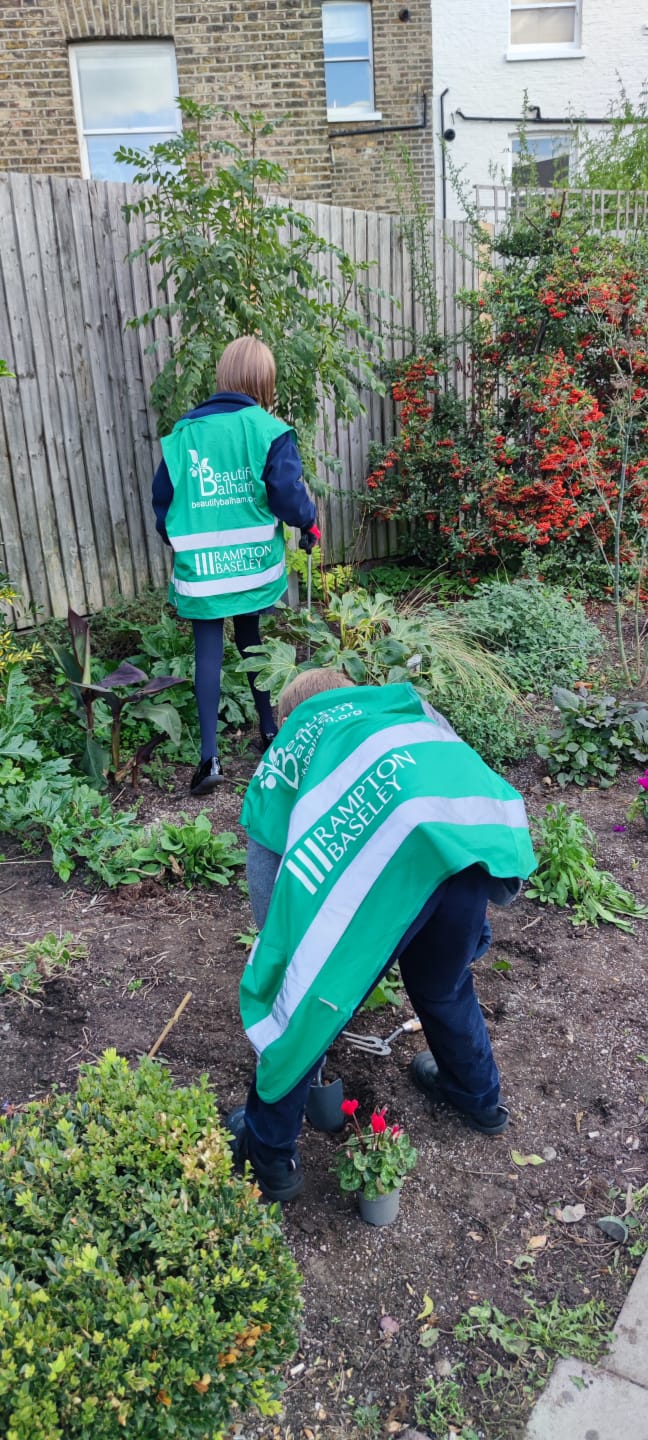
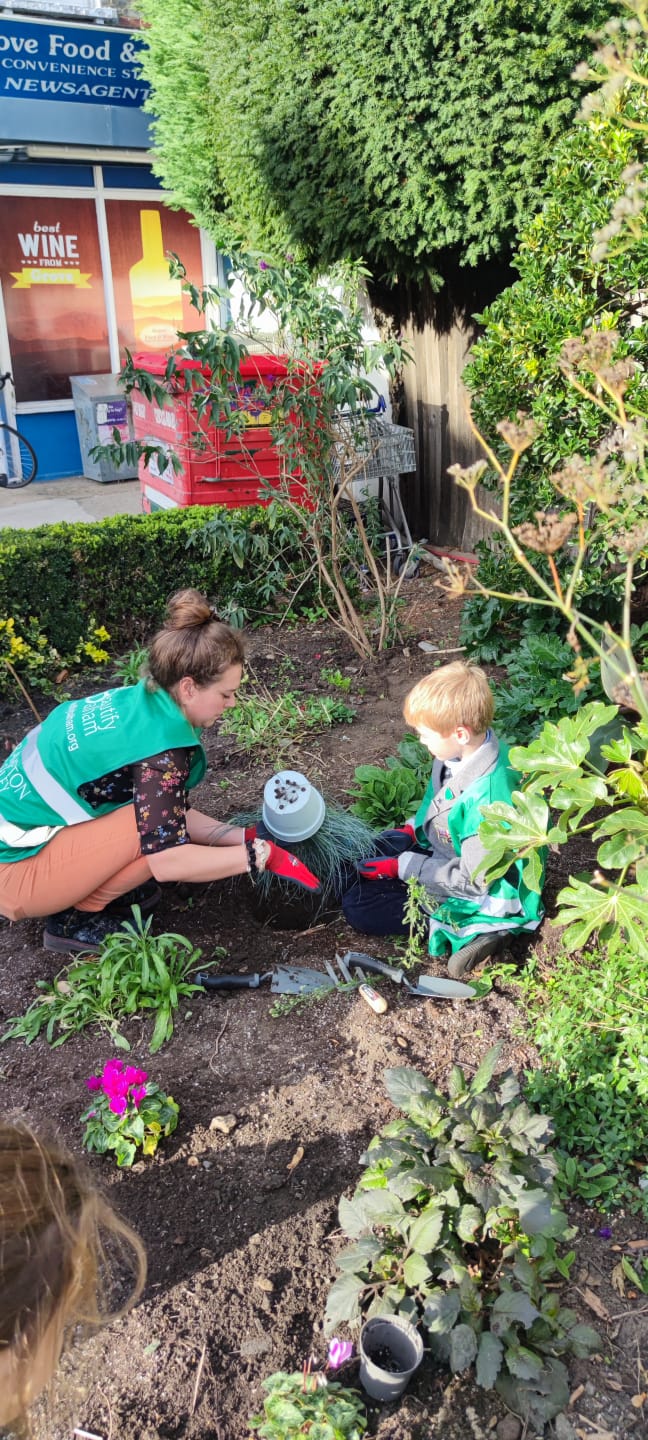
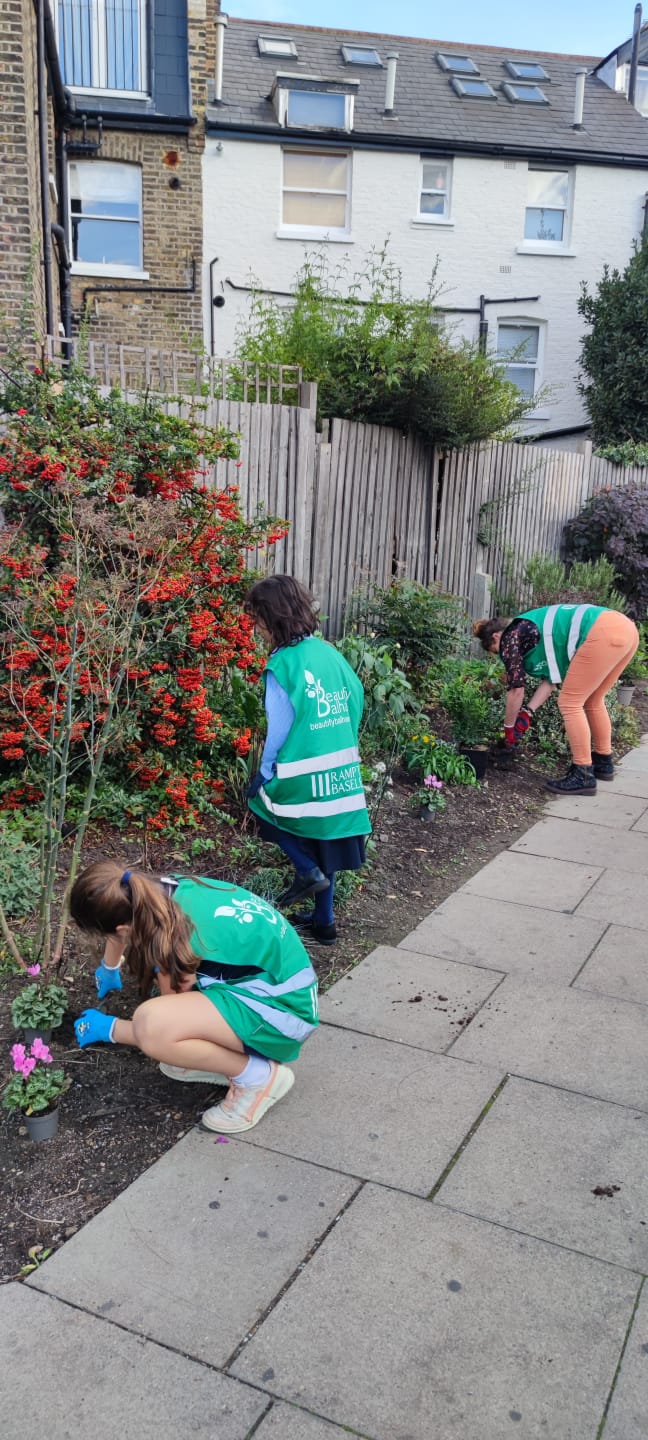
Armed with forks and trowels and wearing Beautify Balham hi-vis vests, together we are going to continue the wonderful work started by local residents Richard, Charlie and Brendan. This garden is on land that no one seems to own, but has been adopted for many years and admired by passers by.

Sadly Richard died, and Charlie and Brendan have hung up their gardening gloves, but they generously asked Beautify Balham to continue their good work.

Justine and Jean from Beautify Balham decided it would be a good idea for children to be involved so asked the local schools. Mark Peters, Deputy Head from Hornsby House School responded.

Each Thursday from 3.45-4.30pm until daylight diminishes, we are going to tidy up and replant this mature garden that just needs a little TLC and some more plants to fill the gaps.

If anyone has bulbs or plants to give to this worthy cause, or could support with a donation to make towards the upkeep, please contact us at hello@beautifybalham.org or donate via PayPal using the form here.

Watch this space & enjoy the cleaning up and greening up of another corner of Balham!

– Jean Millar and The Beautify Balham Team

If you want to write to us and have your own blog post & thoughts placed on this website to help others, please reach out to us via our Contact Us page!
Filed Under: Beautify Balham, Community, Gardening, Nature Tagged With: Community, Planting

Birdsong in Balham

April 15, 2022 by beautifybalham

As International Dawn Chorus Day approaches, on Sunday May 1st, this article reflects on some of the birds that may enliven our environment in Balham.

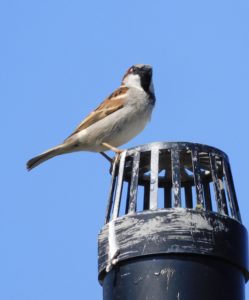
Sparrow

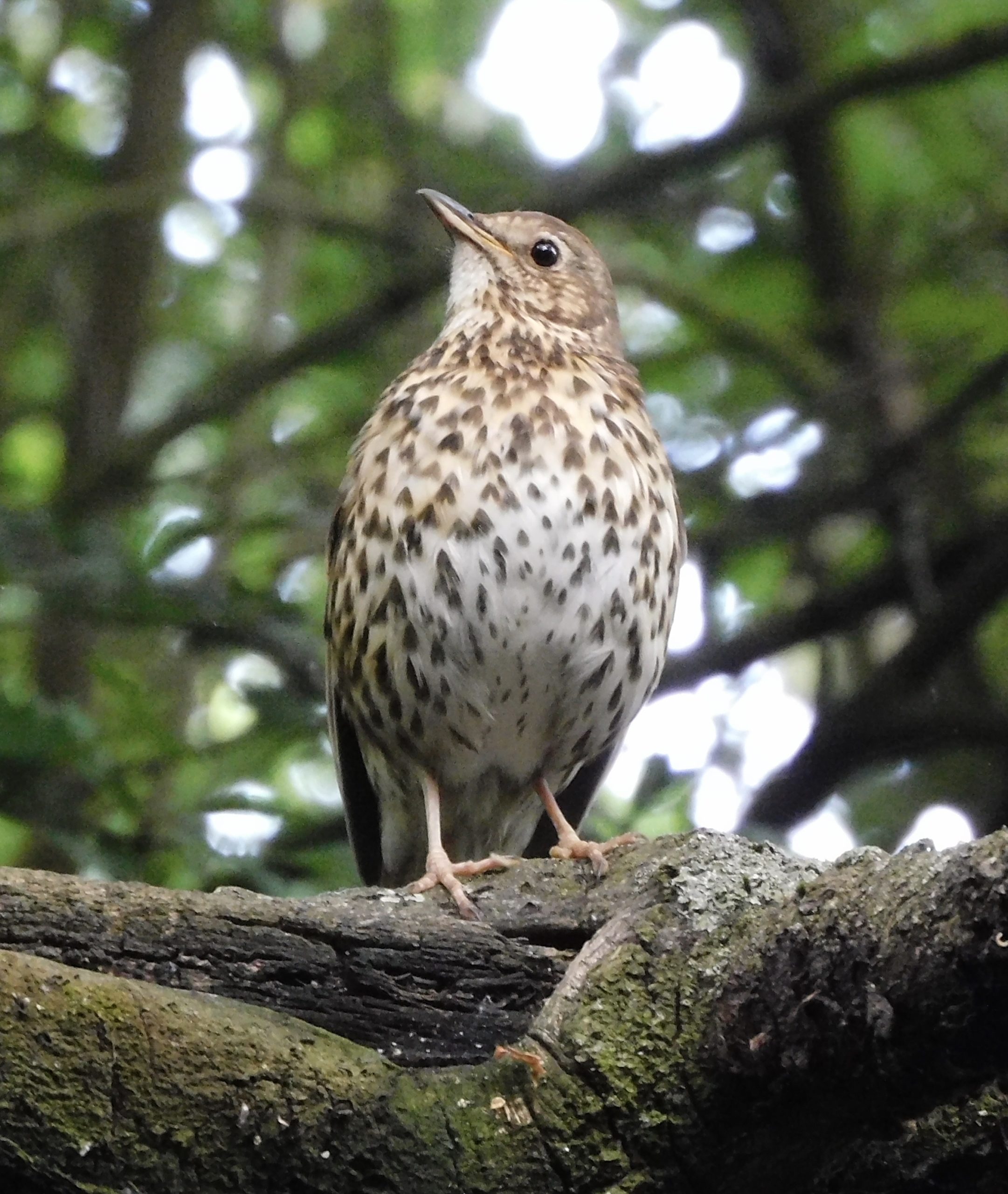
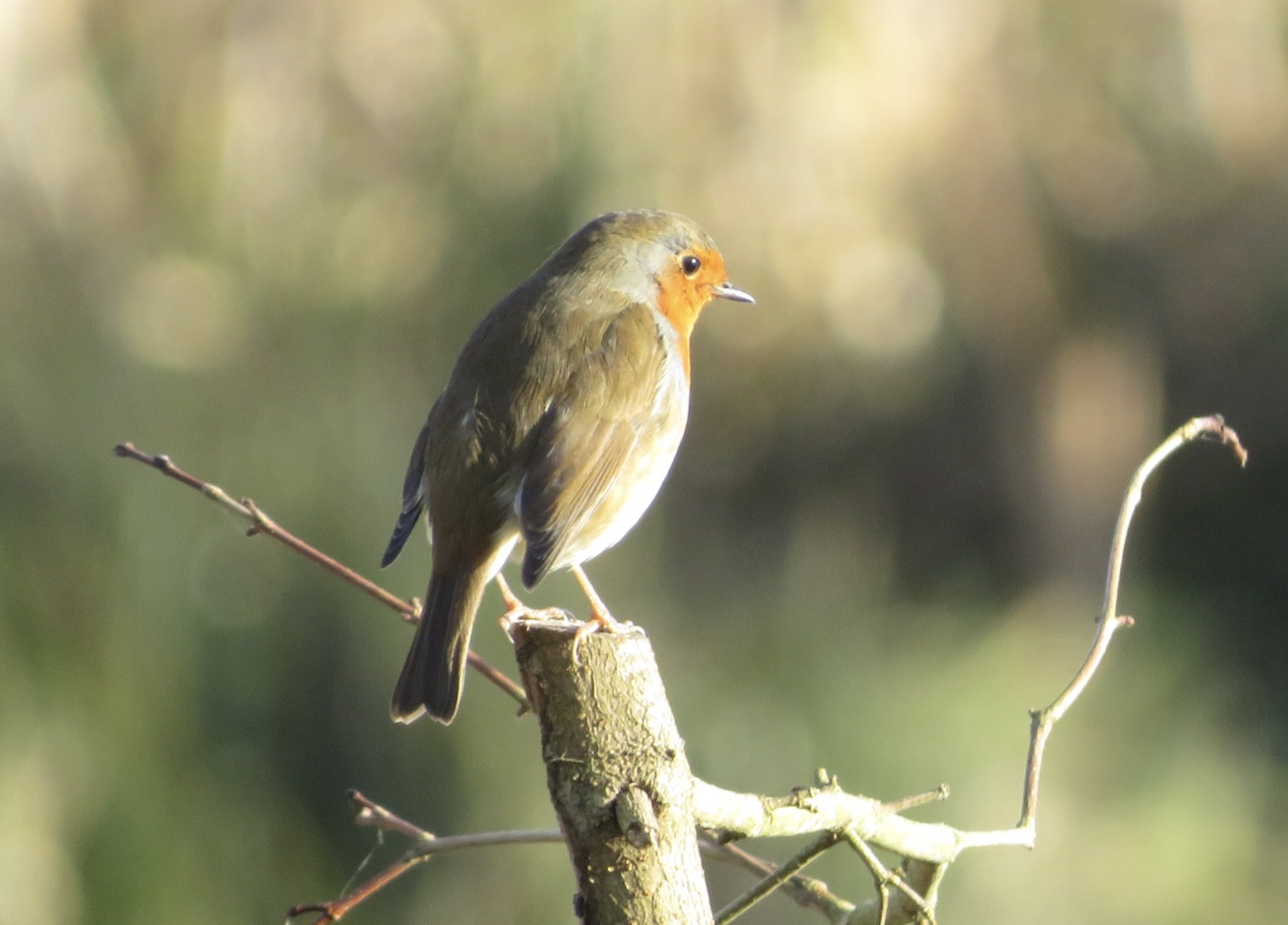
Spring is the time when birdsong reaches its peak, though some of our resident species have already been singing for months – Song Thrushes started to sing in December, and Robins sing all year round – particularly if they have a street light in their territory. Light is one of the key factors that triggers birds to sing, and Robins are especially susceptible to the effect of artificial light sources.

Song Thrush
Robin

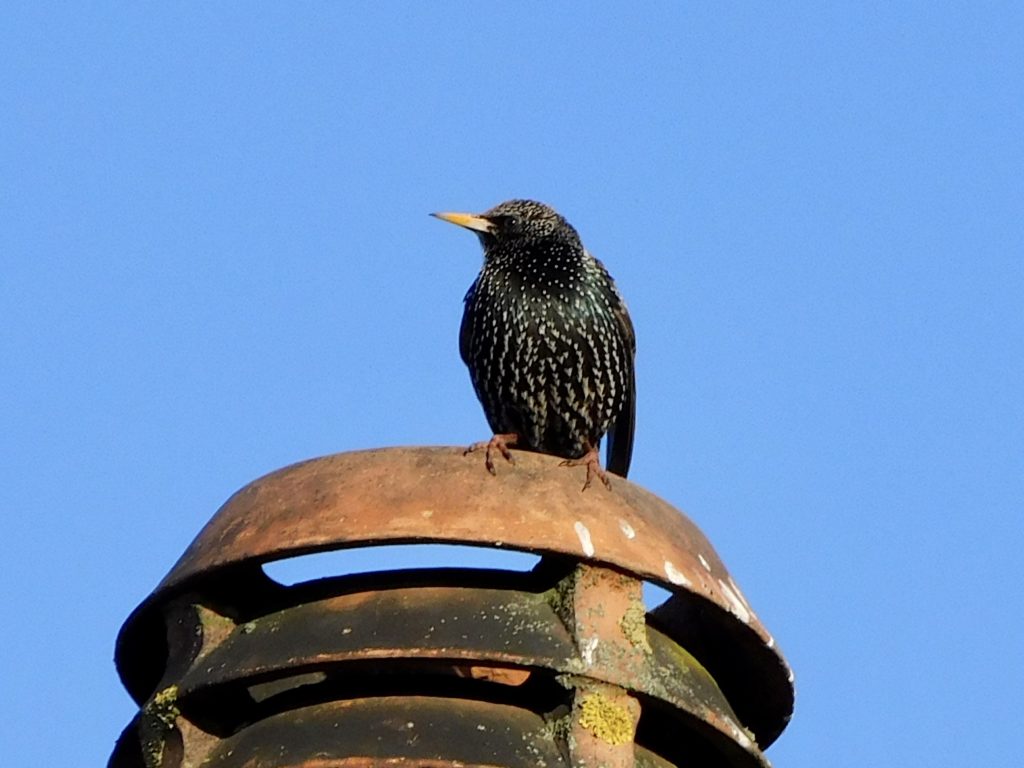
I lead occasional walks for the Friends of Wandsworth Common, looking at and listening to, the birds on the Common. One of the questions that I am asked most frequently is how to identify birds by their songs and calls. There’s no easy answer to this, as an individual’s experience of birdsong is very subjective: one person’s tuneful melody is another person’s raucous squawking. And different individual birds do sing differently – some species will try to impress their prospective partners by incorporating copies of other birds’ songs, or noises that they hear from their environment. Starlings are extremely good at imitating other sounds, and can successfully copy ringtones, car alarms and other noises in their chattering songs. The buildings on the corners opposite Waitrose are a good place to hear them!

Starling

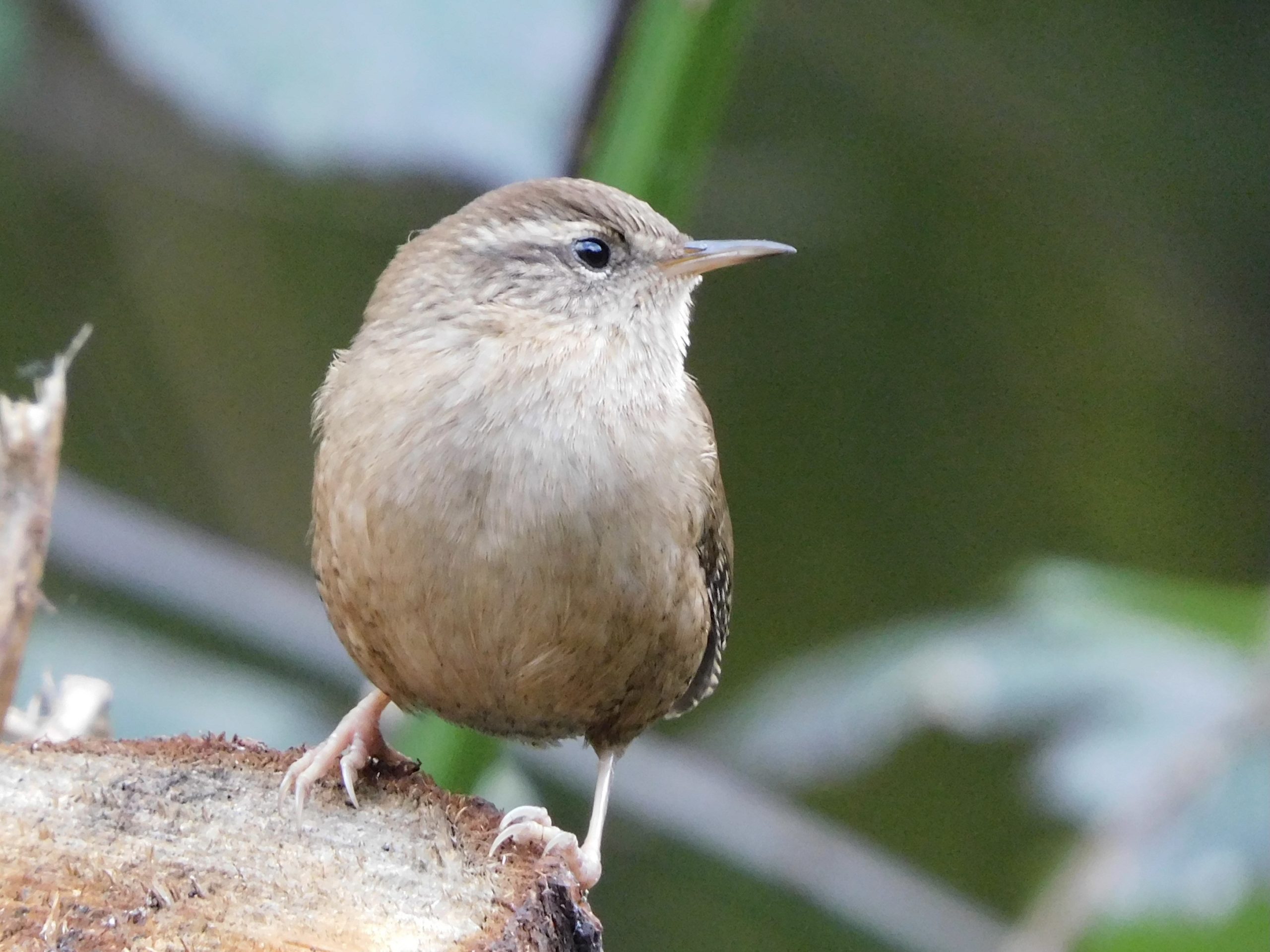
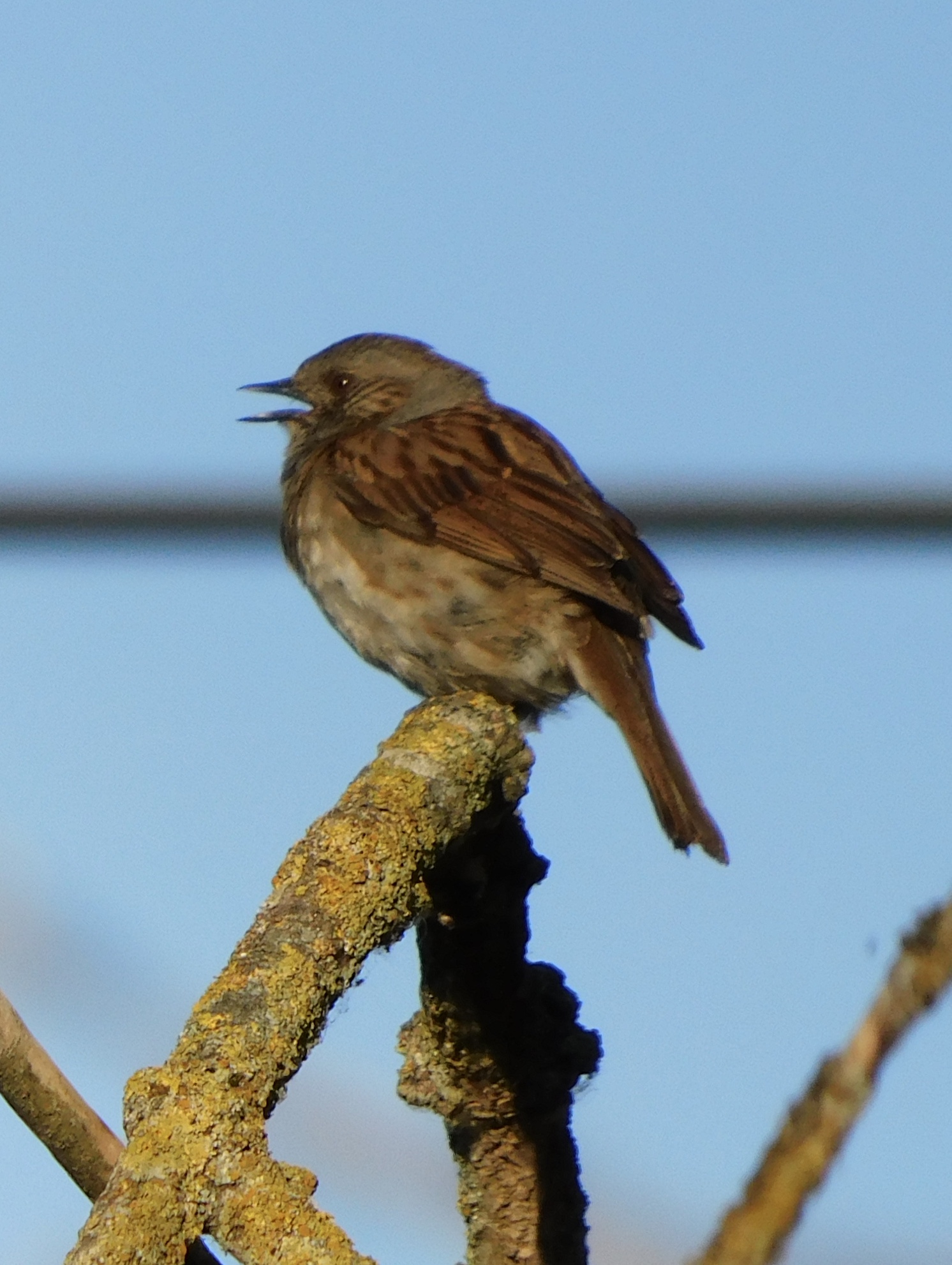
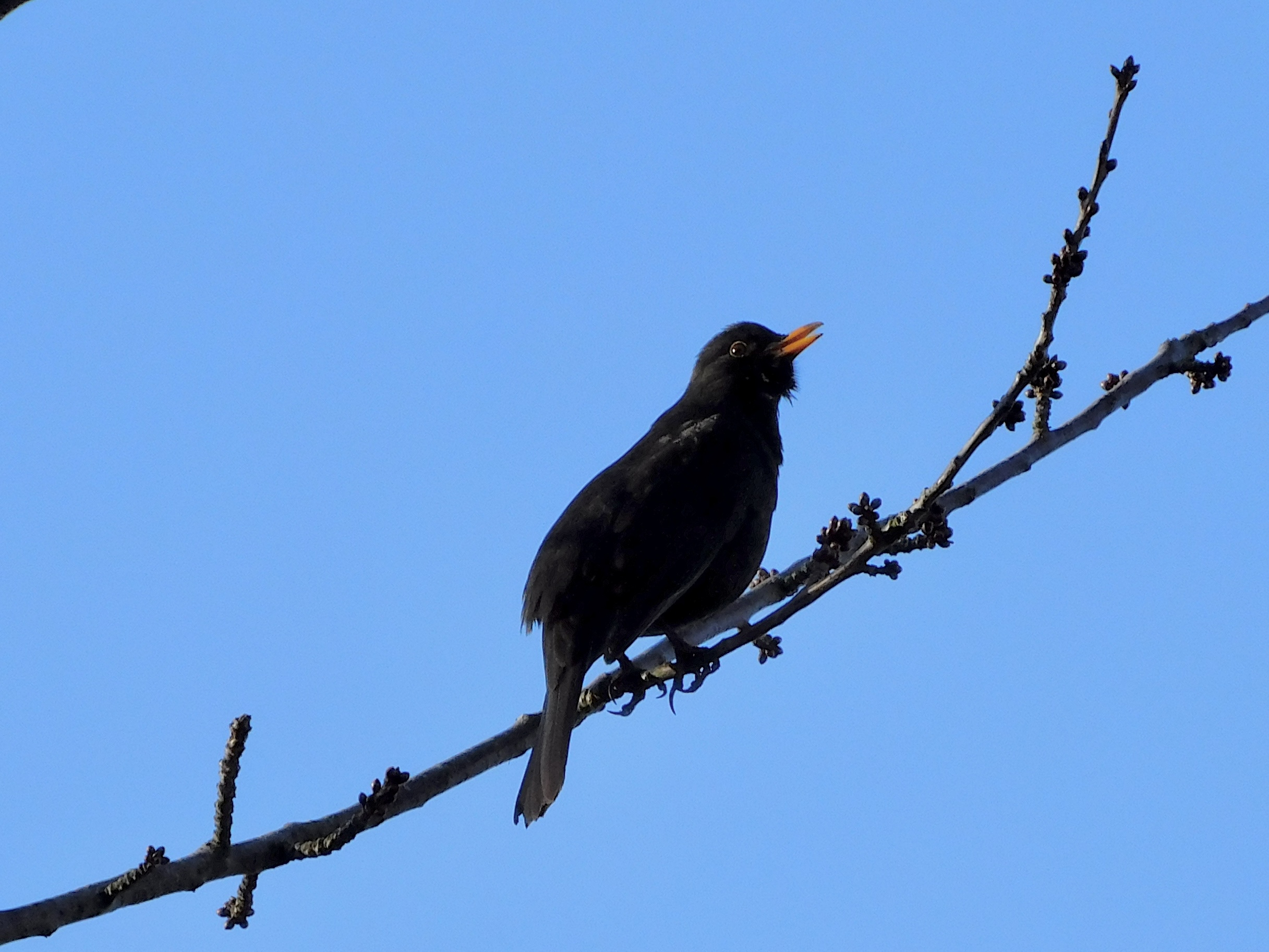
Other birds that can be heard locally include the Wren – a little bird with a big voice, that fires off like a machine gun–and the outwardly unassuming Dunnock (whose private lives are extremely racy), with a song sounding like a shopping trolley with a squeaky wheel. To me, a Robin’s song does tend to validate Michael Jackson’s ornithological masterwork, Rockin’ Robin (does anyone remember the original version by Bobby Day?), in singing “Twiddley dee, twiddley diddley dee”, while the Song Thrush does indeed tend to sing each song twice (or, indeed, three times) over, as Robert Browning noted while thinking abroad. Interestingly, urban Blackbirds are now tending to follow Paul McCartney’s observation in singing in the dead of night – a relatively recent development, possibly reflecting the need to find a quiet time to sing when they are more likely to be heard, rather than compete with daytime traffic noise. Typically, birdsong reaches its peak in the hour or so before and after dawn, and keen birders may be up at 4 a.m. on Dawn Chorus day to appreciate the volume of birdsong as it develops to its peak. But an alternative is just to open a window and hear what’s going on.

Wren
Dunnock
Blackbird

In order to enjoy birdsong, one doesn’t need to identify which bird is making the sound. Birdsong has been around, it’s thought, for about fifty million years! Birdsong has been here for much longer than humans, and it is believed to have originated in Australia. Birdsong has been shown by various studies to have relaxing properties for the human listener and to have potential benefits for our mental health. Various theories have been put forward to explain this – one is that, if birds were singing it meant that they didn’t perceive a threat, and this enabled our ancestors to feel a bit more relaxed! Who knows whether that’s right, but in any case it is worth taking a moment or two to listen and enjoy.

Article by Nick Rutter, Wandsworth Common Bird Walk Guide and a Friend of Wandsworth Common

If you want to write to us and have your own blog post & thoughts placed on this website to help others, please reach out to us via our Contact Us page!
Filed Under: Birds, Nature Tagged With: Birds, Birdsong, Robins, Sparrows, Starlings

  • « Go to Previous Page
  • Go to page 1
  • Go to page 2

Primary Sidebar

BLOG

  1. Item 1
  2. Item 2
  3. Item 3
  • Why Tree Pit Planting Is Transforming Our Streets
    Why Tree Pit Planting Is Transforming Our Streets
    More Than Just a Tree Walk down most roa...
  • Beautify Balham & Hyperoptic
    Beautify Balham & Hyperoptic
    In July and August, Beautify Balham was ...
  • Jean Millar and Justine McNeil of Beautify Balham
    Beautify Balham featured in SW Londoner
    Jean Millar and Justine McNeil spoke to ...
  • Endlesham Road June 2025 Update
    Endlesham Road June 2025 Update
    Planting along Endlesham Road has steadi...
  • Beautify Balham Joins Forces for The Great British Spring Clean 2025
    Beautify Balham Joins Forces for The Great British Spring Clean 2025
    On Saturday 5th April 2025, we were deli...
  • Endlesham Road Community Garden
    Endlesham Road Community Garden
    We identified a piece of land belonging ...
  • How Sprout Up is helping to Beautify Balham
    How Sprout Up is helping to Beautify Balham
    Recently we were delighted to hear from ...
  • Balham in Bloom 2024
    Balham in Bloom 2024
    For the first time since the creation of...
  • Climate Fresk
    Climate Fresk
    Climate change is a scary notion. Wouldn...

FOLLOW US

  • Instagram
  • Bluesky

Copyright © 2026 Beautify Balham · Privacy Policy

Manage Consent
To provide the best experiences, we use technologies like cookies to store and/or access device information. Consenting to these technologies will allow us to process data such as browsing behavior or unique IDs on this site. Not consenting or withdrawing consent, may adversely affect certain features and functions.
Functional Always active
The technical storage or access is strictly necessary for the legitimate purpose of enabling the use of a specific service explicitly requested by the subscriber or user, or for the sole purpose of carrying out the transmission of a communication over an electronic communications network.
Preferences
The technical storage or access is necessary for the legitimate purpose of storing preferences that are not requested by the subscriber or user.
Statistics
The technical storage or access that is used exclusively for statistical purposes. The technical storage or access that is used exclusively for anonymous statistical purposes. Without a subpoena, voluntary compliance on the part of your Internet Service Provider, or additional records from a third party, information stored or retrieved for this purpose alone cannot usually be used to identify you.
Marketing
The technical storage or access is required to create user profiles to send advertising, or to track the user on a website or across several websites for similar marketing purposes.
  • Manage options
  • Manage services
  • Manage {vendor_count} vendors
  • Read more about these purposes
View preferences
  • {title}
  • {title}
  • {title}